
Call for Papers
iRad 2026 | 7–9 January 2026 | Gauhati University, Assam, India
Introduction
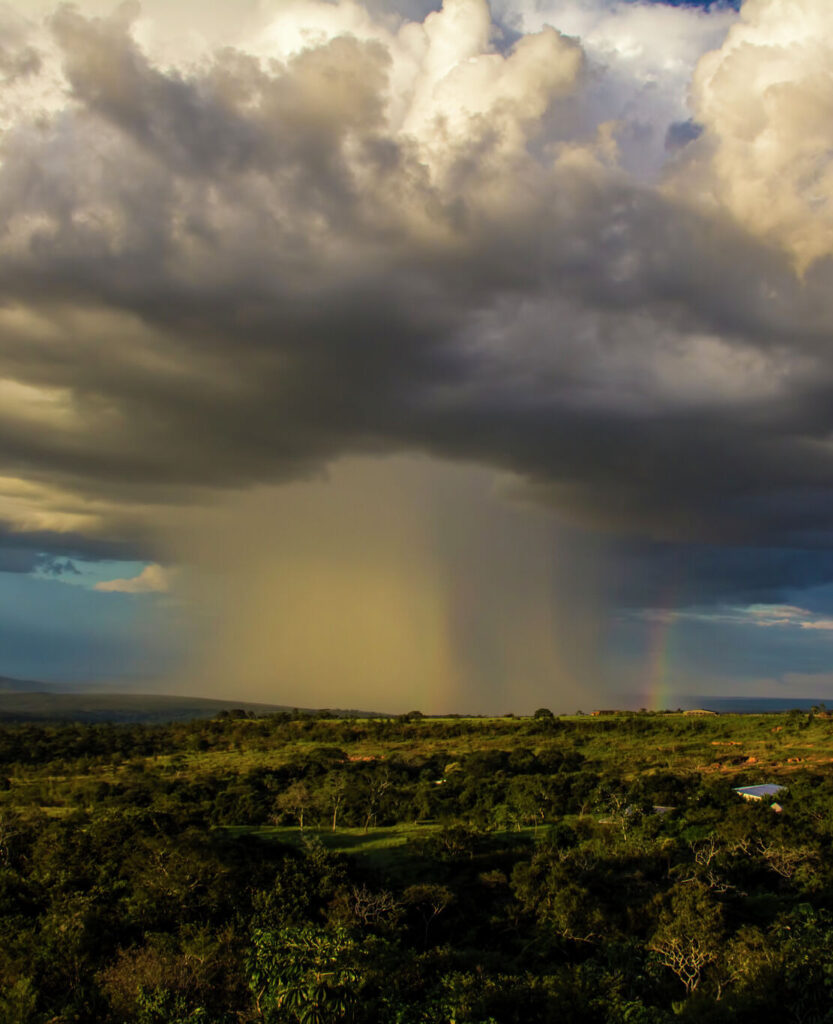
The North-Eastern region of India (NEI) with its complex terrain – mountains, hills, valleys, and rivers – stands as one of the wettest regions in the world. This unique topography, coupled with the dynamic interplay of atmospheric and oceanic systems, gives rise to diverse and intense weather phenomena.
This natural complexity makes the region a natural laboratory for studying tropical cloud systems and extreme weather events including intense rainfall events, and their role in regional climate variability. The NEI is reeling under dual impacts of fast-growing frequency and intensity of sub-daily rainfall extremes and exposure to increasing lengths of critical humid-heat stress days lasting more than 10 days with average gap between such spells reducing to 3-days. The NEI is an important node of the Indian monsoon system where it tends to out of phase with the rest of India on intra-seasonal, interannual and multi-decadal time scale. Unfortunately, there is hardly any high temporal and spatial resolution three-dimensional data for understanding the physics and dynamics of extreme rainfall events in this region.
iRAD 2026 to be held in Gauhati University, Guwahati would provide an opportunity to discuss and debate these issues. iRAD 2026 aims to bring together researchers, technologists, and policymakers to explore how advancements in radar technology can deepen our understanding of these phenomena, improve predictive capabilities, and support disaster resilience in complex terrains.

Conference Theme
Radar Technology for Unravelling Extreme Weather Over Complex Terrain
Important Dates
|
Event
|
Date
|
|---|---|
|
Abstract Submission Starts |
20 August 2025 |
|
Abstract Submission Deadline |
30 September 2025 |
|
Full Paper Submission Deadline (Student Paper Competition) |
30 September 2025 |
|
Notification of Acceptance |
1 November 2025 |
|
Registration (Paper presenters) Starts on |
1 November 2025 |
|
Registration (Radar School) Starts on |
20 September 2025 |
|
Early Bird Registration Deadline |
15 November 2025 |
|
Conference Dates |
7–9 January 2026 |